.png)


There’s an ongoing dilemma among Bitcoiners.
Ideally, we want Bitcoin accepted natively everywhere. You could hold sound money in self-custody, pay privately, and avoid the fiat system entirely. But today, 99%+ merchants still expect to be paid in fiat through card networks like VISA or Mastercard. That is why Bitcoin debit cards exist.
The problem is that not all Bitcoin cards are equal. Some cards require KYC and behave more like normal debit cards. Others are no-KYC, but usually rely on prepaid, offshore, or corporate-card-style structures. That creates the central trade-off:
No-KYC cards ensure total privacy. KYC’ed cards are more reliable and way cheaper.
So the real questions you should ask yourself are:
- How much are you ready to risk & pay for extra privacy?
- Which card actually works when you need it?
For Europe our picks are:
KYC vs no-KYC: the hard truth
A Bitcoin debit card still uses fiat card rails behind the scenes: VISA or Mastercard, issuers, processors, banks, fraud controls and compliance rules. That matters because the card network itself is regulated.
A no-KYC card may look like the perfect solution: spend Bitcoin, avoid identity checks. But the key point many users miss is: if you did not do KYC, someone else did on your behalf. No-KYC cards are not normal consumer debit cards. They rely on prepaid structures, offshore setups, or corporate card programs where a company completes KYB and then issues cards to end users as anonymous“employees”.
These cards still work, at least for some time, but they come with trade-offs:
- much higher fees, and lower limits
- weaker reliability, and more merchant restrictions
- No physical card options
- risk of frozen funds or shutdowns, leading to lost funds
No-KYC cards are not necessarily worse. They can be useful for:
- privacy-sensitive online purchases
- small one-off payments
- testing services
- separating spending from your main bank account
- minimizing data exposure
But they are usually not the best tool for everyday financial life.
The biggest blocker: will the card actually work?
This is the part most people underestimate. A card is only valuable if it works when you actually need it.
Merchants often treat prepaid cards as lower-trust payment methods. They may work for simple online shopping, but fail when the merchant needs identity, a deposit, recurring billing, or the ability to charge you later.
Where no-KYC prepaid cards can fail
Car rentals are one of the clearest examples. Rental companies often need a named cardholder, a security deposit, and the ability to charge later for damage, fuel, tolls or late fees.
Hotels often place pre-authorisation holds for incidentals, room service, minibar charges or damages. Anonymous prepaid cards are generally unacceptable for this because there is no verified account or future liability behind the card.
Fuel pumps may fail because automated stations often pre-authorise a higher amount before the final fuel amount is known.
Subscriptions can be unreliable because prepaid cards can run out of balance or be discarded after one payment. Many subscription merchants prefer normal debit or credit cards.
Money transfer, PayPal-style wallet funding, crypto top-ups, gambling, adult websites, ATMs, money orders and other cash-like transactions are also commonly blocked or restricted by prepaid card programs.
This is the key point: “VISA accepted” does not always mean “accepted like a normal VISA Debit card.”
KYC’ed cards: less private, more useful
KYC’ed cards require identity verification. That is the obvious downside. But the benefit is reliability.
A KYC’ed Bitcoin debit card can operate more like a proper consumer payment card, with stronger banking relationships. That usually means:
- better everyday acceptance, both online and physically in-store
- lower fees, and higher limits
- fewer failed payments
- physical card options, and support for mobile wallets
- less risk of sudden shutdowns
If your goal is not just to make occasional private payments, but to actually live on Bitcoin, reliability matters.
That is where wavecard is built to win.

wavecard: the best KYC’ed Bitcoin debit card
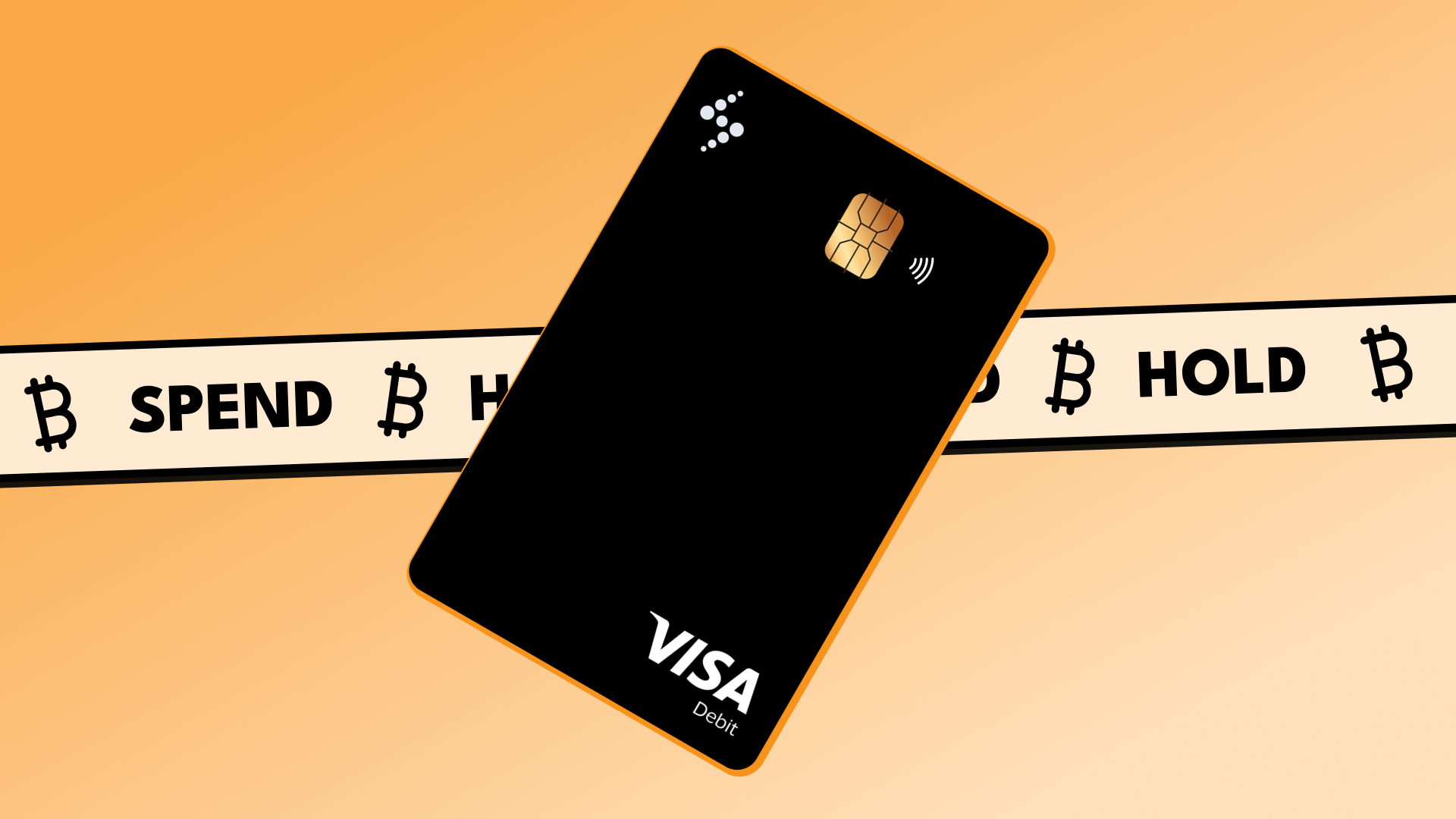
wavecard is built for Europeans who want to spend Bitcoin in everyday life while keeping Bitcoin as the money they hold in self-custody.
Why wavecard stands out
1. Pseudonymous at the merchant level
KYC does not mean every merchant needs to know your real identity. With wavecard, the account must be verified, but the card can use a pseudonymous cardholder name. That reduces merchant-level identity-address exposure for any potential leaks.
2. Hold Bitcoin until the moment you spend
Many cards require you to preload a fiat balance first. That means you sell Bitcoin before you actually need to spend, while holding depreciating fiat on your balance. With wavecard, you can hold Bitcoin until payment time. When you make a purchase, only the amount needed for that transaction is converted.
3. Spend from self-custody
wavecard supports spending through Nostr Wallet Connect, so users can connect their own Lightning wallet and spend from self-custody automatically. That makes it more Bitcoin-native than a simple prepaid card balance.
4. Lower fees
No-KYC cards often charge a privacy premium, which is up to 3-5x higher than KYC’ed cards. wavecard uses a simpler model: 1% conversion fee, with around 0.5% liquidity provider spread included in the BTC price. The total fees of 1.5% are drastically lower than Freedomia’s total of 6.5%. For regular spending, that difference adds up quickly.
Freedomia: the best no-KYC Bitcoin debit card
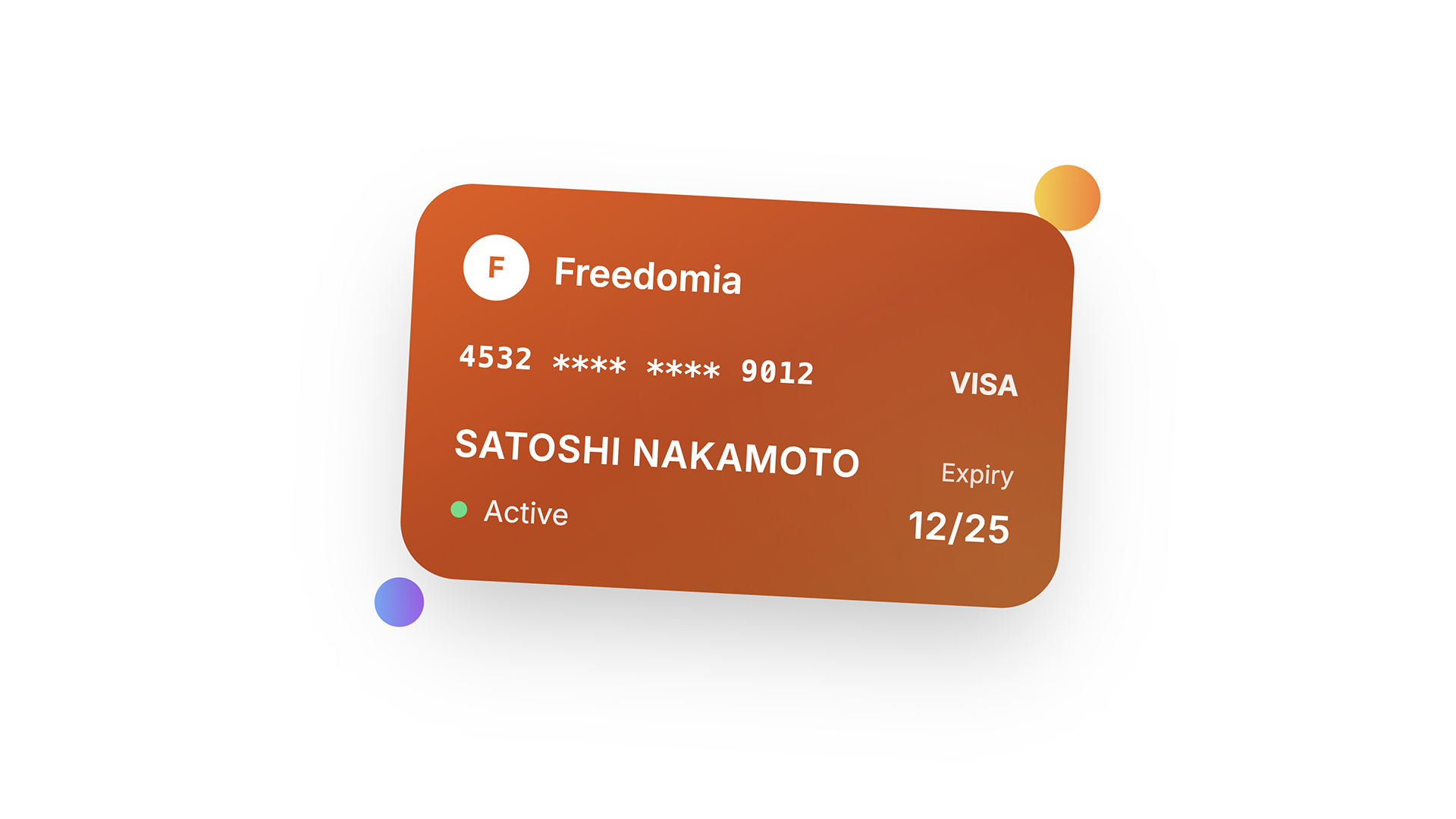
Freedomia is our pick for the best no-KYC Bitcoin card.
It is designed for people who want privacy and are willing to accept the trade-offs. It offers a no-KYC prepaid VISA card that can be topped up with BTC, and used for online or even in-store spending via Google Pay (which is quite rare). That makes it one of the strongest no-KYC options.
On the other hand, its main trade-offs are:
- total fees for Europeans can reach up to 6.5%
- Additional yearly subscription fees of at least $60/year
- Holds USD on the balance, with much lower monthly limits
- potential merchant restrictions, weaker usefulness for travel, deposits and subscriptions
- no equivalent self-custodial Lightning spending model like wavecard.
Freedomia is best for occasional privacy-sensitive spending.
Final verdict
Freedomia is the better option if your priority is maximum privacy and you mainly need a card for occasional low-risk spending. Do not keep any funds you’re not ready to lose there, because such programmes can be frozen and closed anytime.
Meanwhile, wavecard is the better option if your priority is actually living on Bitcoin in your self-custody.
It has 4x smaller fees, does not charge any yearly subscriptions on top of it, and is built for actual everyday use. It also lets you hold Bitcoin until the moment you spend and connect your own Lightning wallet through Nostr Wallet Connect.
